How Many Babies Can a Brown Recluse Have
ENTFACT-631: Brown Recluse Spider | Download PDF | En Español
by Michael F. Potter, Extension Entomologist
University of Kentucky Higher of Agriculture
Many types of spiders live effectually homes and buildings. Most are harmless, and many are benign given they casualty upon other nuisance insects, like mosquitos or flies.
I spider institute in Kentucky and much of the Midwest that is potentially dangerous is the brown recluse. It is sometimes referred to as the 'violin' or 'fiddleback' spider considering of the violin-shaped mark on its back. Although brown recluse spider bites are rare, the venom can sometimes cause serious wounds and infestations should exist taken seriously.
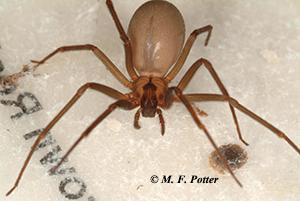
Fig. 1: Dark-brown recluse spiders ofttimes have a fiddle-shaped marker.
Distribution and Diagnosis
The brown recluse spider,Loxosceles reclusa, is found throughout the south central and Midwestern United states of america. Infestations in Kentucky are more common as one travels west. Other species ofLoxosceles spiders occur in the southwestern U.Due south. and southern California, just the brown recluse is the nigh notable and widespread. Recluse spiders are rare exterior their native range. In full general, these spiders are widely over-reported and less common than perceived. Occasionally, one or a few spiders may exist transported to a non-native area in boxes or furnishings, only infestations seldom become established.
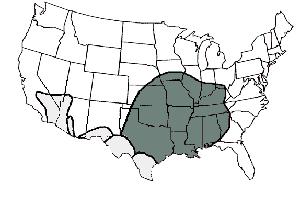
Fig. two: Distribution of the brown recluse spider (dark shading) and other species ofLoxosceles spiders in the U.S. (light shading) (adjusted from distribution map of R. Vetter, Univ. Calif. Riverside).
Though variable in size, adult brown recluse spiders with legs extended are about the size of a U.S. quarter. Coloration ranges from tan to dark dark-brown, and the abdomen and legs are uniformly- colored with no stripes, bands or mottling. The legs are long and thin and lack conspicuous spines. For laypersons, the most distinguishing feature of a brownish recluse is a dark violin-shaped marking on its back, with the cervix of the violin pointing toward the rear (abdomen) of the spider. This feature is consistent in adult brown recluses, but sometimes less obvious in younger spiders.
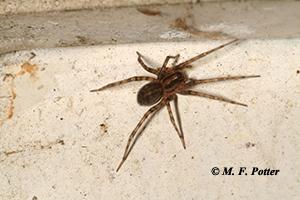
Fig. 3: The banding on the legs of this wolf spider is 1 indication that it is not a dark-brown recluse.
A more definitive diagnostic feature is the centre pattern -- brown recluses have a semi-circular organisation of six eyes (three groups of two) while most other spiders have 8 optics. Seeing this feature requires a proficient quality hand lens. Many harmless brown spiders are mistaken for the brownish recluse, and so it is prudent to have specimens confirmed by an entomologist or knowledgeable pest command business firm.
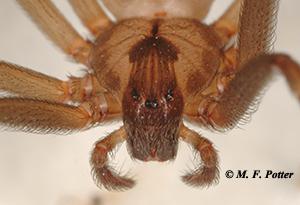
Fig. 4: Brown recluse spiders have three pairs of eyes, bundled in a semi-circle.
Habits and Development
In nature, chocolate-brown recluse spiders alive outdoors under rocks, logs, woodpiles and debris. The spider is too well adapted to living indoors with humans. They are resilient enough to withstand winters in unheated basements and stifling summer temperatures in attics, persisting many months without food or h2o. The brown recluse hunts at nighttime seeking insect prey, either alive or expressionless. It does non apply a web to capture food — suspended webs strung along walls, corners, ceilings, outdoor vegetation, and in other exposed areas are virtually always associated with other types of spiders. In homes, such webs are often produced by harmless cobweb or cellar spiders. While sometimes considered a nuisance, spiders similar the cobweb or cellar varieties prey upon other pests (including brown recluses), and in this sense could be considered beneficial.
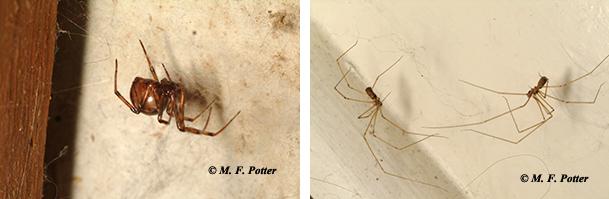
Fig. 5: Cobweb spiders (left) and cellar spiders (right) often build webs in homes, simply are harmless.
During daylight hours, dark-brown recluse spiders typically retreat to nighttime, secluded areas. They frequently line their daytime retreats with irregular webbing, which is used to form their egg sacs. Adult female person recluses seldom venture far from their retreat, whereas males and older juveniles are more mobile and tend to travel farther. Consequently, they are more likely to wander into shoes, clothing or bedding at night and bite people when they inadvertently become trapped against the peel. At times, brown recluse spiders will exist seen during daylight hours itch on floors, walls and other exposed surfaces. Such behavior can exist triggered by hunger, overcrowding, pesticide awarding, or other factors.
Almost 40-50 eggs are independent within 1/3-inch diameter off-white silken egg sacs. The tiny emerged spiders gradually increase in size, molting v to eight times before condign adults. The molted (shed) skins of the brown recluse accept a distinct outstretched appearance and can exist useful in confirming infestation.
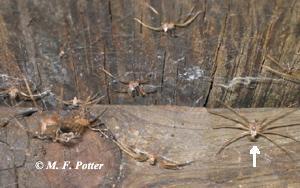
Fig. 6: Shed skins of a brown recluse spider
Brown recluse spiders mature in about a twelvemonth and accept an average lifespan of 2 to 4 years. The females produce up to 5 egg sacs in a lifetime. Infestation levels in homes vary greatly, ranging from one or a few spiders to several hundred.
Bites and Medical Significance
Like other spiders, the brown recluse is not ambitious. It is quite common, in fact, to live in a edifice that is heavily infested and never be bitten. Nigh bites occur in response to torso pressure, when a spider is inadvertently trapped confronting bare skin. Some people are bitten when they roll over a brown recluse in bed. Other bites occur while moving stored items or putting on a piece of clothing that a spider has chosen for its daytime retreat. Chocolate-brown recluse spiders have very small fangs and cannot seize with teeth through wear.
The initial bite is commonly painless. Often the victim is unaware until 3 to 8 hours later when the seize with teeth site may become red, swollen, and tender. The majority of brown recluse spider bites remain localized, healing within 3 weeks without serious complexity or medical intervention.
In other cases, the victim may develop a necrotic lesion, appearing as a dry, sinking bluish patch with irregular edges, a stake eye and peripheral redness. Ofttimes there is a central blister. Every bit the venom continues to destroy tissue, the wound may expand up to several inches over a period of days or weeks. The necrotic ulcer can persist for several months, leaving a deep scar.
Infrequently, bites in the early stages produce systemic reactions accompanied by fever, chills, dizziness, rash or vomiting. Severe reactions to the venom are more than common in children, the elderly, and patients in poor health. Persons bitten past a brownish recluse spider should apply ice, elevate the affected expanse, and seek medical attention immediately.
Medical Misdiagnosis
Spider bites are difficult to diagnose, even by physicians. Reverse to popular belief, it is difficult to diagnosis a dark-brown recluse spider seize with teeth from the wound alone. Many medical conditions mimic the necrotic-looking sore from a recluse bite, including bacterial and fungal infections, diabetic and force per unit area ulcers, and gangrene. Several misdiagnoses take arisen from outbreaks of drug-resistant infections pastStaphyloccus aureus (commonly referred to as a Staph infection). That bacterium produces painful peel lesions that resemble recluse bites, and tin run rampant in close living quarters such equally hospitals, camps, barracks, and correctional facilities. Similar-looking lesions can likewise be caused by other types of insects and arthropods.
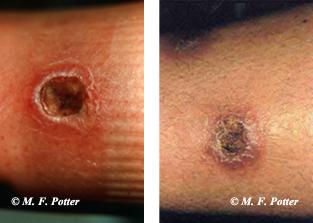
Fig. 7: Many medical weather are mistaken for dark-brown recluse bites.
The wound on the left is from a recluse spider, the one on the right from a bacterial infection.
Suspected bites occurring outside the native range of the dark-brown recluse spider are peculiarly unlikely, given that surveys rarely yield recluses in not-native areas. Presumptive bites go even more unlikely if thorough inspection of the bounds yields no sign of brown recluse spiders. If possible, anyone bitten past what is thought to be a brown recluse should endeavour to collect the specimen and bring it to a qualified individual for identification. Even crushed or damaged specimens tin can usually be identified. Confirmation past an skillful volition help the dr. make up one's mind on the appropriate class of treatment.
Controlling Infestations
Brown recluse spiders are difficult to eradicate, largely considering of their secretive habits. Virtually any dark, undisturbed area can serve as harborage, and many such places occur inside buildings. Because of this (and the potential wellness threat), handling is best performed past professionals.
Where They Hibernate – Thorough inspection with a bright flashlight is needed to reveal the location and extent of infestation. Probable hiding places include crevices, corners, and wall-floor junctures, especially behind ataxia and stored items. Reducing clutter affords fewer places for the spiders to hide and can raise effectiveness of treatments. Dark-brown recluse spiders may also live backside walls, and inhabit the voids within concrete cake foundations. In infested garages, attics, basements and crawl spaces, the spiders, egg sacs, and distinctive shed skins are often found along joists, sills and rafters, every bit well equally under rolled insulation. In living areas, they sometimes inhabit crevices behind and beneath beds and furniture, closets, article of clothing, shoes, and stored items. When sorting through boxes or materials, wear long sleeves and gloves to avert beingness bitten. Brown recluse spiders too live to a higher place suspended ceilings, behind baseboards and woodwork, and within ducts and registers.
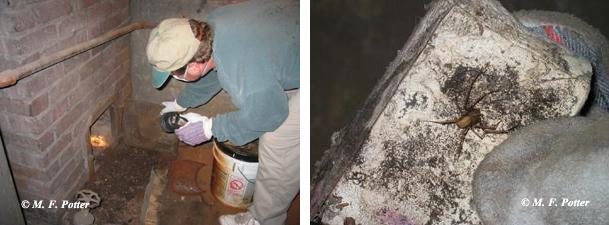
Fig. eight: Thorough inspections are needed to detect and treat hidden infestations.
Outdoors the spiders may be found in barns, sheds, woodpiles, and under anything laying on the ground. They also commonly reside behind shutters. Migration indoors tin can be reduced by moving firewood, building materials, and debris abroad from foundations. Sealing cracks and holes in a edifice's exterior can further help to continue these, and other pests, outdoors. Some of the more common entry points for brown recluse spiders include gaps under doors, vents and utility penetrations, beneath the bottommost edge of siding, and where eaves and soffits see the sides of buildings. Outdoor populations of chocolate-brown recluse spiders are less common in the northern portions of its range.
Utilise of Gum Traps – An excellent fashion to survey for brown recluse is to install flat, mucilaginous cards known equally glue traps. Ofttimes used to capture mice and cockroaches, the traps tin be purchased online or at grocery, hardware or farm supply stores. The best glue traps for capturing the spiders are flat, like thin pieces of sticky cardboard without a raised perimeter edge.
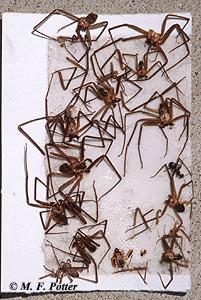
Fig. 9: Brown recluse spiders defenseless on a gum trap.
Several traps should exist placed into corners and affluent along walls.
The more than glue traps used the better — dozens placed throughout a home will reveal areas where spiders are about abundant. Traps should be placed in corners and along baseboards and wall-floor junctures, specially behind furniture and clutter since spiders tend to travel in these areas. Besides being useful for detection, glue traps tin can capture and kill large numbers of spiders, especially the males, which are more than likely to wander into places where people are accidentally bitten. Ongoing eradication efforts can be judged by the number of new spiders caught in traps. Glue traps should be installed before applying insecticides since some products volition cause spiders to become active and wander into traps.
Use of Insecticides – Chocolate-brown recluse spider elimination will ofttimes require employ of insecticides. Some spiders will not be caught in mucilage traps, especially the adult females, which stay hidden more so than male spiders. Insecticides should be applied into cracks and other areas where spiders are likely to exist hiding, attempting to contact directly every bit many as possible. Liquid, droplets, and dust formulations may be employed.
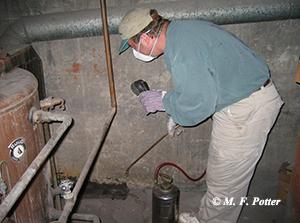
Fig. 10: Insecticides are often needed to control infestations.
Grit insecticides are particularly effective for treating cracks forth baseboards, sills, joists and rafters in basements, crawl spaces, and attics. Dusts as well piece of work well when treating nether insulation, within voids of concrete cake foundations, and backside light switch and outlet plates to contact spiders traveling forth wires from attics. Effective grit insecticides include Cimexa®, Drione® and Tri-Die® (silica gel), Tempo® (cyfluthrin), and DeltaDust® (deltamethrin). Apply the dust as a fine deposit barely visible to the naked centre. Spiders and other pests tend to avoid powdery accumulations much every bit nosotros would avoid walking through a snowdrift. The easiest way to apply such a minor amount is with a 'bellows' paw duster sold in hardware stores or online.
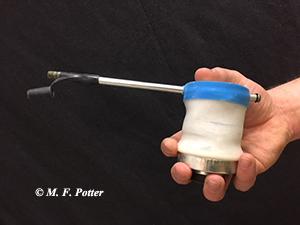
Fig. eleven: Grit formulations are easier to utilize with a bellows duster.
Insecticides can also be sprayed into harborages and places where spiders tend to travel. Effective ingredients (e.g., cyfluthrin, bifenthrin, deltamethrin, lambda cyhalothrin) are often found in products used to control cockroaches, ants, and other crawling insects. The sprays tin also exist practical outdoors (behind shutters, the bottommost edge of siding, forth foundations, etc. Total-release pesticide foggers known every bit 'problems bombs' are seldom effective against these spiders, and should only be considered when treating otherwise inaccessible areas.
Avoiding Bites
As control measures are being implemented, precautions can be taken to further reduce the chance of being bitten. Beds should be moved away from walls, and remove any bed skirts/dust ruffles to suspension contact with the floor. Shoes and clothing should as well be kept off floors, or at least shaken out before wearing. Remove excess clutter and store seldom used items in plastic storage containers. There may be some comfort in knowing that bites are a rare occurrence, even in dwellings where dark-brown recluses are arable.
Revised vii/12/18
CAUTION: The use of some products may not be legal in your country or land. Please cheque with your local county agent or regulatory official before using any pesticide mentioned in this publication. Always READ AND FOLLOW LABEL DIRECTIONS FOR Condom Apply OF ANY PESTICIDE.
Please note that all photos in this publication are copyrighted material and may not exist copied or downloaded without permission of the writer.
bumgarnertrustold.blogspot.com
Source: https://entomology.ca.uky.edu/ef631
0 Response to "How Many Babies Can a Brown Recluse Have"
Postar um comentário